
Hey there. If you’re reading this, chances are you’ve glanced up at your gutters lately and thought, “I really need to do something about that.” Maybe you’re seeing little green sprouts growing up there, or maybe you watched the last rainstorm turn your downspout into a mini waterfall.
You’re not alone. Living here means our homes take a beating from the elements. And just like the last blog post talked about your roof being the quiet workhorse, your gutters are the unsung heroes of the whole operation. When they work, you don’t think about them. When they don’t, well, your wallet feels it.
So, let’s talk about cleaning them. Not in that perfect, magazine-cover way. Let’s talk about the messy, real-world, get-it-done way. My goal here is to help you decide if this is a job you can tackle, and if so, how to do it without making a expensive mistake or, you know, falling off a ladder.
First Things First: Let’s Be Real About Safety
I have to start here because it matters that much. Grabbing a ladder and hopping up on the roof might feel like the fastest way to get it done, but it’s also the fastest way to get hurt. A huge number of injuries every year happen exactly this way.
Please, before you even get the ladder out of the garage, take a hard look at your house. Is it two stories? Is your roof steep? Is the ground uneven? If you answered yes to any of those, this might not be the year for a DIY approach. And honestly, that’s okay. Knowing when to call in a pro isn’t giving up; it’s being smart. The Occupational Safety and Health Administration (OSHA) has some pretty clear guidelines on ladder safety that are worth a quick peek—it’s the kind of info that sticks with you when you’re up there.

If you’ve got a single-story home with a manageable roof, and you feel steady on a ladder, let’s get into it. You’ll need a buddy to hold the ladder, a good pair of work gloves, safety glasses (trust me, that gutter gunk stings if it falls in your eye), a sturdy scoop or trowel, and a bucket.
Step 1: The Hands-On Part (Literally)
Start by getting your ladder set up on the firmest, most level spot you can find. If the ground is soft, lay a piece of plywood down to keep it from sinking. Have your partner foot the ladder—this is non-negotiable.
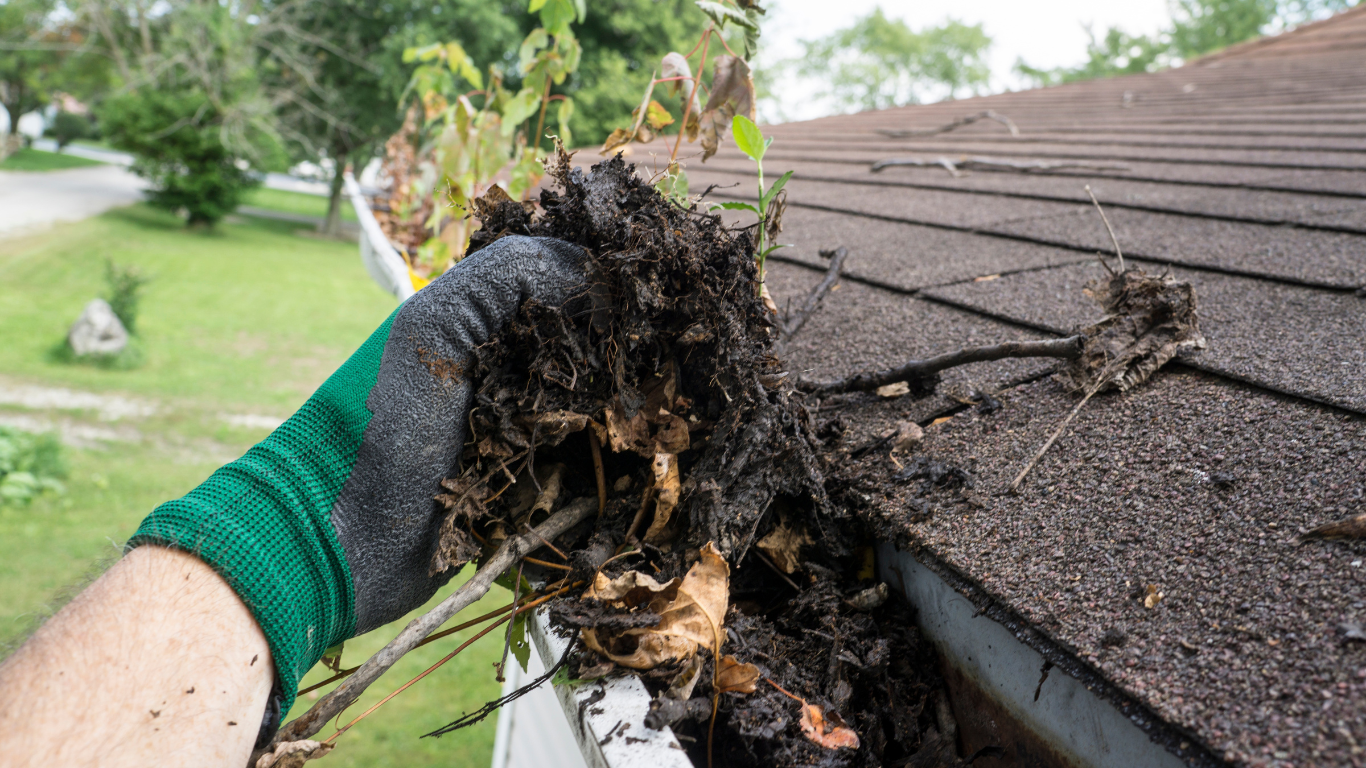
Work near a downspout and just start pulling the big stuff out. We’re talking leaves, those heavy, wet mats of pine needles, the weird black gunk that’s accumulated. Drop it right into your bucket. You’ll be amazed how much comes out. If you see little trees or plants starting to grow, that’s a sign the gutters have been clogged for a while and water has been sitting there, nice and cozy.
Step 2: The Water Test
Once the big debris is out, it’s time to see if the system actually works. Grab your garden hose and turn it on. Start spraying at the end of the gutter farthest from the downspout and work your way toward it.
What you’re looking for is simple: does the water run freely toward the downspout and down? Or does it pool up in spots? If it pools, that section of gutter might have settled and is no longer sloping the right way. Just so that you can have a proper idea, the NAHB (National Association of Home Builders) notes that gutters should slope just a little, about a quarter-inch for every 10 feet, to keep water moving. While you’re at it, watch for leaks where gutter sections join. If you see them, make a mental note. That’s a simple fix with some sealant later, but don’t forget to address it because, believe it or not, this is potential damage to your walls and foundation.
Step 3: Wrestling with the Downspout
This is where a lot of people get stumped. You flush the gutters, everything looks great, but nothing comes out the bottom of the downspout. That means you’ve got a clog right in the pipe.
Try this: stick the hose up from the bottom of the downspout. Sometimes the water pressure from below is enough to break up the clog. You might see a big glob of gunk shoot out the top, believe me, it’s oddly satisfying! But if that doesn’t work, then you might need to take the downspout apart (don’t worry, they usually come apart pretty easily). Once it’s clear and in place, always make sure the bottom of the downspout has an extension on it to carry that water away from your foundation, since directing water away from your house is one of the best things you can do to prevent moisture problems in your basement or crawlspace If you don’t believe me, go check out the Environmental Protection Agency (EPA), they have a ton of info on why this is so important.
While You’re Up There: Play Detective
Cleaning is really just half the job. The other half is looking for trouble. Keep an eye out for:
- Sagging sections: This means the hangers have pulled loose.
- Rust spots or cracks: Especially in older metal gutters.
- Peeling paint or soft wood on the fascia board (the board right behind the gutter): That’s a classic sign of long-term water damage.
Catching a loose bracket now is a ten-minute fix. Catching a rotted fascia board later means a much bigger repair.
So, How Often Are We Talking?
In our neck of the woods? At least twice a year. Once in late fall after the last leaves have dropped, and once in early spring to clear out what winter blew in. If you’ve got big trees hanging over the roof, you might be on a three-times-a-year schedule. Follow our Blog where you will get more info on gardening and yard maintenance that will touch on this, tying it all together, because It’s not just about the gutters; it’s about managing your whole property.
The Honest Truth About DIY
I’ll leave you with this. We’re a construction company. We want people to care about their homes. We love it when a homeowner gets their hands dirty and learns how their house works. It makes you a smarter and a more confident homeowner.
But we also fix a lot of problems that started with a small DIY mistake or an injury that happened when someone pushed their luck on a ladder. There’s zero shame in looking at your two-story house, looking at that ladder, and saying, “Nope, I’m calling the folks at APE.”
And hey, we mean that. If you’re unsure, if you try this and find something that doesn’t look right, or if you know a neighbor who can’t manage this kind of work anymore, reach out. We’re here to help our community take care of the places we call home. Sometimes that means doing the work, and sometimes it just means giving honest advice. Either way, we’ve got your back.
Stay connected with us
🔨 If you need help with maintenance for your property, Contact us today and we’ll knock it down for you, keeping your investment in Top condition!
📞 Call us at +1 (971) 373-1909
🌐 Visit us at www.apeconstructions.com
📍 Serving Homeowners Across Portland, Oregon & surrounding areas!
Leave a Reply